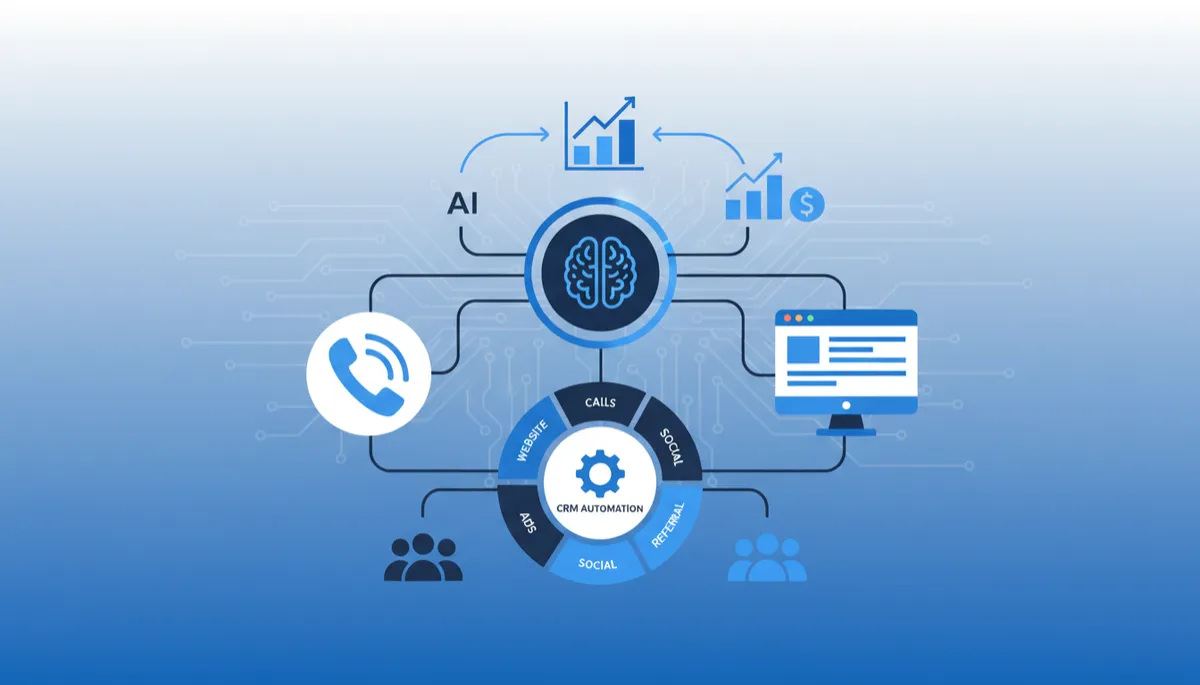
Which Lead Source Actually Pays? AI & CRM Reporting for Small Business
LeadCrush.ai | LeadCrush.ai Blog
AI Lead Generation, CRM Automation, Small Business Sales Growth
Which Lead Source Actually Pays? How Small Businesses Use AI and CRM Reporting to Grow Sales
Meta description: Discover how AI lead generation, CRM automation, and lead source tracking show which channels drive booked appointments and real revenue.
If you’re like most small business owners, you’re spending money on multiple lead sources—website forms, ads, social media, referrals, phone calls—but it’s hard to tell which ones actually turn into booked appointments and paid invoices. The good news: with today’s AI lead generation, smart lead source tracking, and simple CRM automation, you can finally see what’s working, double down on it, and stop wasting budget on what’s not.

Step 1: Let AI Bring In More (and Better) Leads
AI isn’t just for big brands anymore. By 2026, about two-thirds of U.S. small businesses are using some kind of AI, and over half are using it specifically in sales and marketing. That’s because AI lead generation tools quietly do the heavy lifting in the background while you and your team focus on serving customers.
Instead of guessing who might be interested, AI can help you:
- Attract the right visitors with content and offers tuned to your ideal customers
- Filter out spam and obvious time-wasters before they ever hit your inbox
- Respond instantly to new leads with helpful, human-sounding messages
The magic isn’t just “more leads.” It’s more of the right leads—people who are ready to book, buy, or at least have a real conversation. When those leads flow into your CRM with clear source tags, you’re ready for the next step: automation.
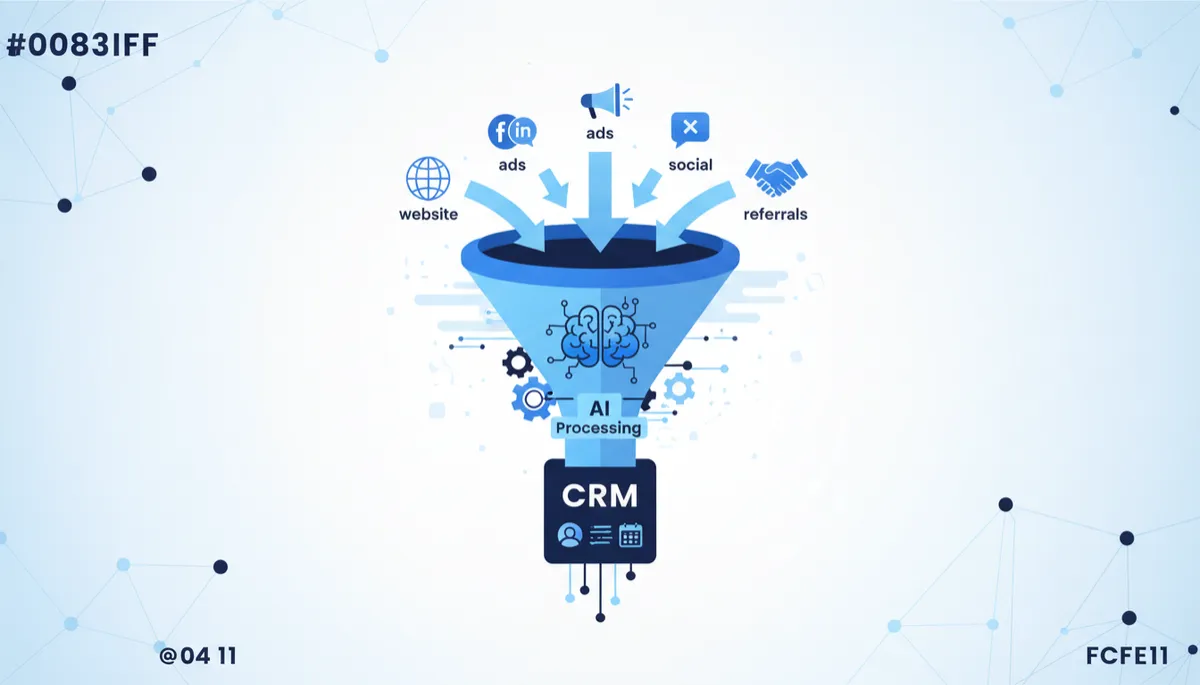
Clean modern of AI funnel pulling in leads from website, ads, social, referrals into a CRM, with...
Step 2: Use CRM Automation to Capture, Clean, and Organize Every Lead
A lot of small businesses lose deals for a simple reason: leads slip through the cracks. Someone filled out a form, called after hours, or replied to an ad—and nobody followed up in time. That’s where CRM automation pays for itself fast.
With the right workflows, your CRM can automatically:
- Create a new contact every time someone calls, clicks, or fills out a form
- Attach the correct lead source (website, Google Ads, Facebook, referral, etc.)
- Enrich and clean data—names, emails, phone numbers—so your reports stay accurate
When your CRM is doing this automatically, you’re no longer relying on your team to remember to log everything. That clean, consistent data is what makes reliable lead source tracking possible later on.
Step 3: Track Which Lead Sources Turn into Appointments and Revenue
Not all leads are created equal. A cheap lead that never books is more expensive than a pricier lead that becomes a loyal customer. That’s why modern small businesses are leaning hard into lead source tracking and simple attribution reporting inside their CRM.
The goal is to answer a few practical questions every month:
- Which channels bring in the most qualified leads—website forms, calls, ads, referrals, or social?
- Which sources actually lead to booked appointments on your calendar?
- Where does the revenue come from after the dust settles?
AI helps here too. Instead of wrestling with spreadsheets, AI can pull data from your CRM and ad platforms to show you real-time reports: cost per lead, cost per appointment, and revenue by source. Studies show organic inbound channels often convert at about twice the rate of paid channels—data like that helps you make smarter, calmer decisions about where to invest.
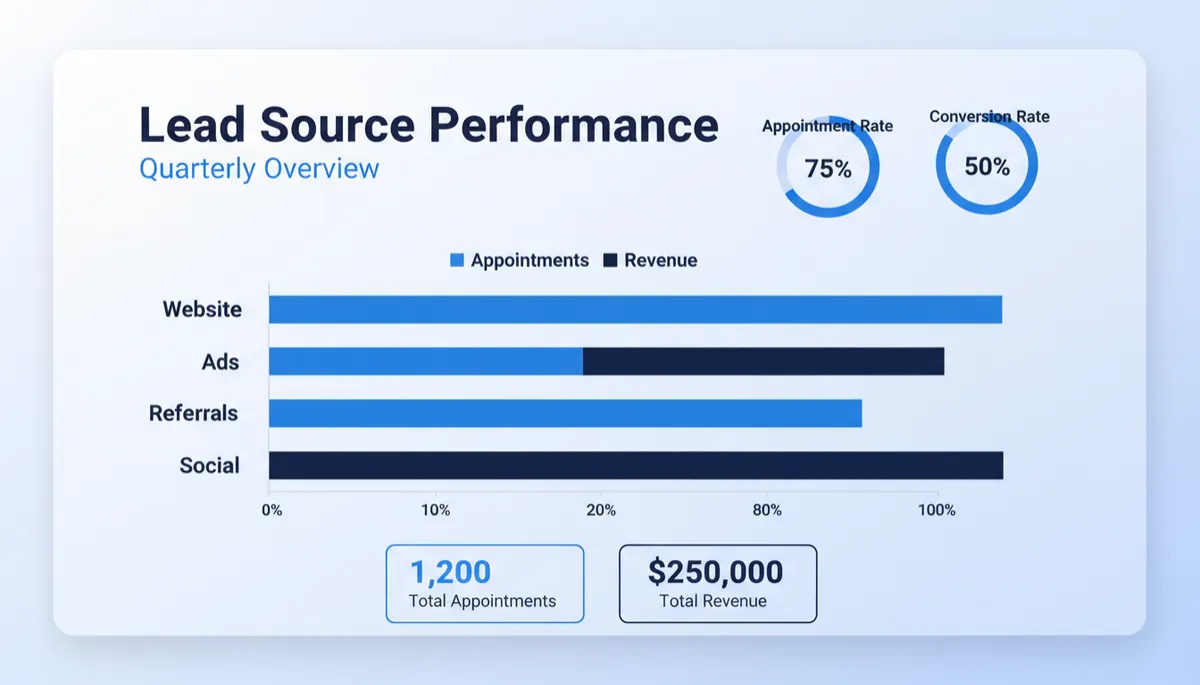
Clean modern of CRM dashboard screen showing bar chart of appointments and revenue by lead...
Step 4: Automate Lead Follow-Up So You Win More from Every Channel
Once you know which channels are bringing in good leads, the next lever is simple: convert more of them. Fast, consistent lead follow-up is one of the biggest drivers of small business sales growth, and it’s an area where automation shines.
With AI and CRM workflows working together, you can:
- Send an instant text or email when a new lead comes in, 24/7, from any channel
- Offer self-serve booking links so leads can grab a time on your calendar right away
- Schedule friendly, multi-touch follow-up sequences so you stay top-of-mind without manual chasing
You’re still in control of the message and the offers. Automation just makes sure every qualified lead gets a fast, professional experience—no matter how busy your day gets.
Step 5: Put Your Budget Behind What Works (and Cut the Rest)
Once your AI lead generation, CRM automation, and lead source tracking are in place, the final step is where the payoff really shows up: reallocating budget based on real numbers, not hunches.
Here’s a simple monthly checklist you can run:
- Review: Check leads, appointments, and revenue by source in your CRM reports.
- Rank: Identify your top 2–3 channels by profit, not just volume.
- Reinvest: Shift ad spend, content time, and energy toward those winners.
- Trim: Pause or reduce channels that aren’t pulling their weight.
This is how small teams create big-company clarity. You don’t need a full-time analyst—just good data and a simple rhythm of review and adjustment.
Ready to See Which Lead Sources Actually Pay?
If you’re tired of wondering whether your marketing is working, it’s time to put AI, CRM automation, and clear reporting to work for you. LeadCrush.ai is built to help small businesses capture every lead, track every source, automate smart follow-up, and invest confidently in the channels that truly drive small business sales growth.
Visit LeadCrush.ai to see how you can set this up in days, not months—and finally know which lead source actually pays.